
Although the involvement of Chiefs and traditional rulers by declaring their intentions to a particular political affiliation or being partisan rulers raised so many issues in the country, they received various criticisms from the masses, for instance in the last ended 2016 presidential and parliamentary elections, the participation of Chiefs in our democratic dispensation cannot be disregarded.
Advisory Role
Article 274 also provides for the established in and for each region of Ghana a Regional House of Chiefs. A Regional House of Chiefs consists of such members as Parliament may, by law, determine and performs such functions as may be conferred upon it by or under an Act of Parliament. Basically a Regional House of Chiefs is responsible for any matter relating to or affecting chieftaincy in the region. It hears and determines appeals from the traditional councils within the region in respect of the nomination, election, selection, installation or deposition of a person as a chief and have original jurisdiction in all matters relating to a paramount stool or skin or the occupant of a paramount stool or skin, including a queen mother to a paramount stool or skin. It undertakes a study and makes such general recommendations as are appropriate for the resolution or expeditious disposition of chieftaincy disputes in the region. It also undertakes the compilation of the customary laws and lines of succession applicable to each stool or skin in the region.
The original and appellate jurisdiction of a Regional House of Chiefs is exercised by a Judicial Committee of the Regional House of Chiefs consisting of three chiefs appointed by the Regional House of Chiefs from among its members. A Judicial Committee of a Regional Chief is assisted by a lawyer of not less than five years' standing appointed by the Regional House of Chiefs in the recommendation of the Attorney-General and may be removed from office on the ground of proven misbehavior or infirmity of mind or body by the votes of not less than two-thirds of all the members of the Regional House of Chiefs.
Article 274 also provides for the established in and for each region of Ghana a Regional House of Chiefs. A Regional House of Chiefs consists of such members as Parliament may, by law, determine and performs such functions as may be conferred upon it by or under an Act of Parliament. Basically a Regional House of Chiefs is responsible for any matter relating to or affecting chieftaincy in the region. It hears and determines appeals from the traditional councils within the region in respect of the nomination, election, selection, installation or deposition of a person as a chief and have original jurisdiction in all matters relating to a paramount stool or skin or the occupant of a paramount stool or skin, including a queen mother to a paramount stool or skin. It undertakes a study and makes such general recommendations as are appropriate for the resolution or expeditious disposition of chieftaincy disputes in the region. It also undertakes the compilation of the customary laws and lines of succession applicable to each stool or skin in the region.
The original and appellate jurisdiction of a Regional House of Chiefs is exercised by a Judicial Committee of the Regional House of Chiefs consisting of three chiefs appointed by the Regional House of Chiefs from among its members. A Judicial Committee of a Regional Chief is assisted by a lawyer of not less than five years' standing appointed by the Regional House of Chiefs in the recommendation of the Attorney-General and may be removed from office on the ground of proven misbehavior or infirmity of mind or body by the votes of not less than two-thirds of all the members of the Regional House of Chiefs.
They initiate developmental projects
As trustees of communal lands and natural resources, chiefs are often the pivot around which local socio-economic development revolves. Unfortunately the hunger for power has rendered our government standing in the way of progress at the local levels. For instance District Executives are appointed solely by the President and the chiefs have little to no say in the appointment of local government personnel. The government would have to collaborate with our chiefs via decentralization to enable them mobilize their people effectively in development of their own communities.
Competitive succession
Looking at when a stool becomes vacant, qualified persons with lineage to the stool are invited to submit their candidacy through the queen-mother a watchdog of royal lineage. The process continues by selecting a candidate and the sub-chiefs each representing the seven Ashanti clans known as king makers are made to confirm this candidate. All this process is democratic in itself. Someone may argue that why should chiefs selected from his direct stool lineage be democratic? Each of the seven clans of the Akan has its own lineage with respect to a particular city or village.
Competitive succession
Looking at when a stool becomes vacant, qualified persons with lineage to the stool are invited to submit their candidacy through the queen-mother a watchdog of royal lineage. The process continues by selecting a candidate and the sub-chiefs each representing the seven Ashanti clans known as king makers are made to confirm this candidate. All this process is democratic in itself. Someone may argue that why should chiefs selected from his direct stool lineage be democratic? Each of the seven clans of the Akan has its own lineage with respect to a particular city or village.
Settlement of dispute
The role of traditional leaders in the modern democratic dispensation can also be seen in Customary Dispute Resolution, specific provisions shall be incorporated in national, state or municipal constitutions or laws to provide for traditional or customary courts composed of traditional chiefs and community leaders to decide matters relating to customs and traditions.
Conclusion
I totally disagree with the fact that Chieftancy is a retrogressive institution. Almost everywhere, chiefs and chiefdoms have become active agents in the quest by the ?modern big men and women? of politics, business, popular entertainment, bureaucracy and the intellect for traditional cultural symbols as a way of maximizing opportunities at the centre of bureaucratic and state power. It is in this connection that some scholars have understood the growing interest in the new elite to invest in neo-traditional titles and maintain strong links with their home village through kin and client patronage networks.
I totally disagree with the fact that Chieftancy is a retrogressive institution. Almost everywhere, chiefs and chiefdoms have become active agents in the quest by the ?modern big men and women? of politics, business, popular entertainment, bureaucracy and the intellect for traditional cultural symbols as a way of maximizing opportunities at the centre of bureaucratic and state power. It is in this connection that some scholars have understood the growing interest in the new elite to invest in neo-traditional titles and maintain strong links with their home village through kin and client patronage networks.


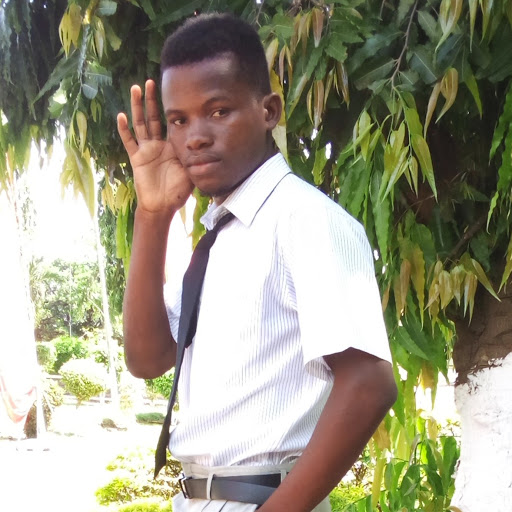 Hello, my name is Abdul-Salam Bukari. I'm a 21 year old Blogger from Ghana. I am Famed for wisdom, knowledge and my level of understanding through my writings. I, together with my Team promise to give you the best of Entertainment, News, Articles and many more interesting Stories circulating in our country.
Welcome to Todays World where you will never wish to leave.
Welcome to the Bloggers World. Contact me on +233/0246060951
Hello, my name is Abdul-Salam Bukari. I'm a 21 year old Blogger from Ghana. I am Famed for wisdom, knowledge and my level of understanding through my writings. I, together with my Team promise to give you the best of Entertainment, News, Articles and many more interesting Stories circulating in our country.
Welcome to Todays World where you will never wish to leave.
Welcome to the Bloggers World. Contact me on +233/0246060951
No comments:
Post a Comment